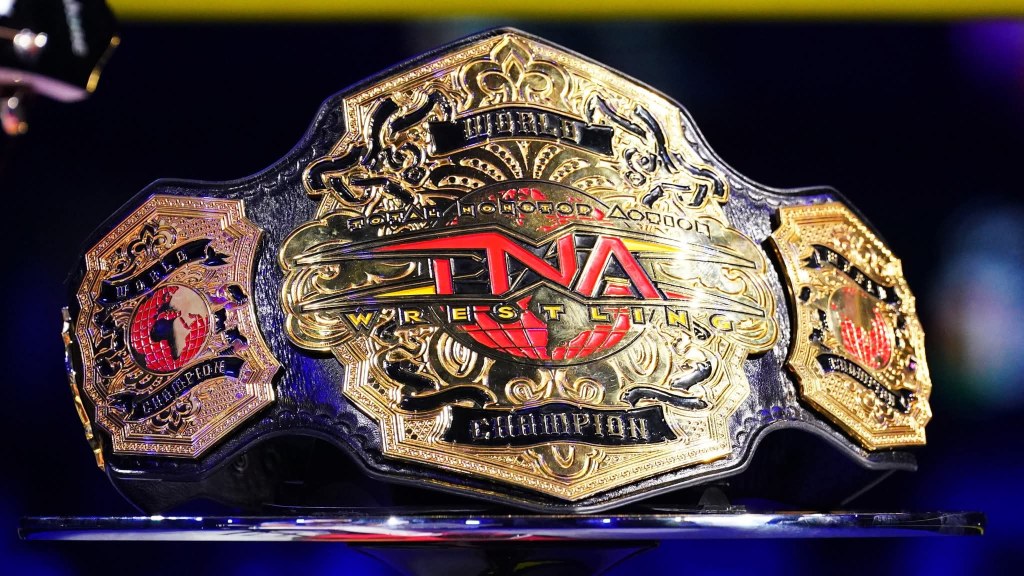
In the glittering, high-stakes landscape of professional wrestling, championships are more than just leather and gold—they are symbols of eras, stories of survival, and occasionally, the centerpieces of total corporate meltdowns. The TNA (Total Nonstop Action) World Heavyweight Championship stands as one of the most resilient, storied, and—let’s be honest—downright quirky prizes in the history of the squared circle.
To understand why this belt matters, you have to look past the velvet ropes and into the heart of a promotion that refused to die.
The TNA World Title wasn’t born in a vacuum, it was born out of a divorce. From 2002 to 2007, TNA utilized the legendary NWA World Heavyweight Championship. It was a “hand-me-down” prestige that linked the young, hungry promotion to the days of Lou Thesz and Dusty Rhodes.
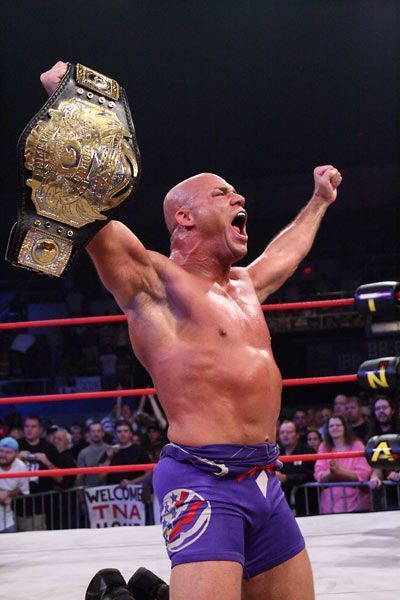
However, on May 13, 2007, the NWA and TNA abruptly severed ties. The NWA stripped then-champion Christian Cage of the title on the very morning of the Sacrifice pay-per-view. TNA’s response was peak wrestling: they ignored the NWA, kept the physical belt for the night, and by the next television taping, they unveiled the first TNA World Heavyweight Championship. And frankly, it was absolutely beautiful. Kurt Angle was crowned the inaugural champion, instantly injecting the title with Olympic-level legitimacy and prestige.
So, who of worth has worn this gold?
A title is only as prestigious as the shoulders it rests upon. TNA’s strategy was a volatile mix of “Founding Fathers” and “Established Icons.”
1. The Workhorses
AJ Styles, often called “Mr. TNA,” used the title to prove that a “homegrown” talent could carry a global brand. His reigns were defined by the X-Division style—high-flying, fast-paced, and technically flawless. Then there was Samoa Joe, whose 2008 title win at Lockdown remains one of the most visceral “big fight” atmospheres in company history.
2. The Olympic Standard
Kurt Angle is the undisputed king of this championship. Holding the title a record six times, Angle’s matches for the TNA World Title—against the likes of Desmond Wolfe, Jeff Jarrett, and Abyss—are the reason the belt gained “Major League” status. Angle didn’t just defend a belt; he defended the honor of the promotion.
3. The Icons
When Sting captured the gold, it signaled to the world that TNA was a destination, not a pitstop. Later, the likes of Mick Foley, Ric Flair (as a mentor/manager), and Hulk Hogan (as an executive) circled the title, ensuring that whenever the TNA World Championship was on the line, the wrestling world was watching.
The “Identity Crisis” Redesigns
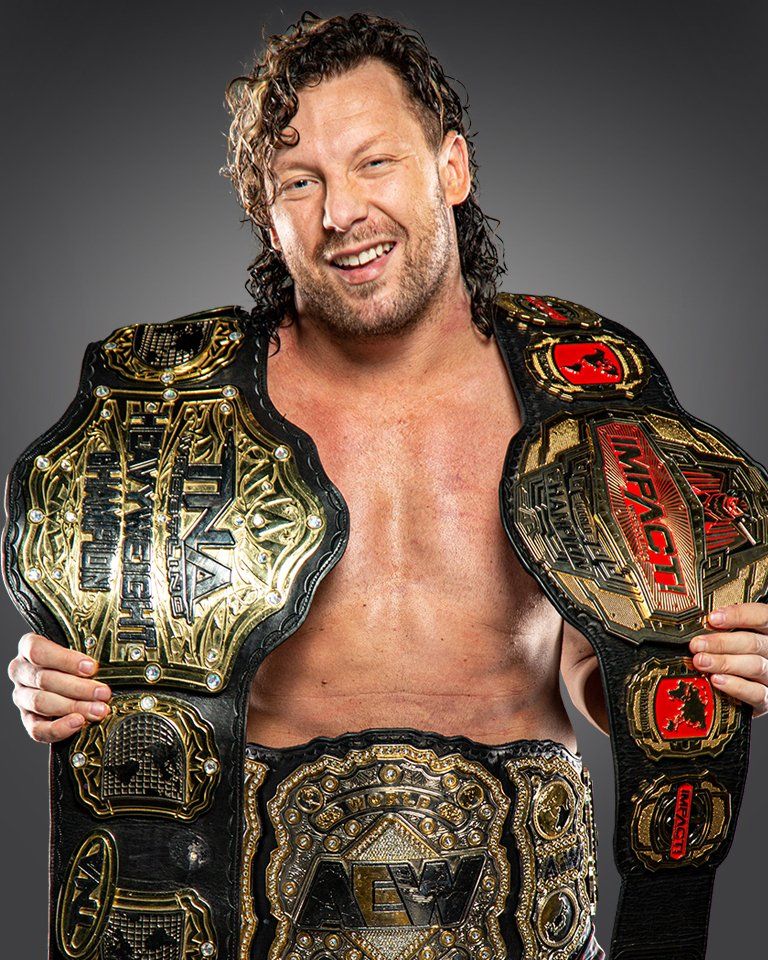
If the WWE Championship is a classic tuxedo, the TNA World Title is a wardrobe that changes with the owner’s mood. The championship has seen several fascinating (and controversial) physical iterations:
The Original Eagle: A classic, regal design that looked like a traditional heavyweight prize.
The “Immortal” Belt: When Jeff Hardy turned heel and joined the “Immortal” faction, the title was replaced with a custom-made, purple-and-silver “Enigma” design. It featured Hardy’s face and looked more like a piece of psychedelic art than a sports trophy.
The weird Impact Era: As the company transitioned to Impact Wrestling, the belt saw various iterations, including a blue-themed version and the “unified” GFW (Global Force Wrestling) design during a brief, confusing merger period. Like, really confusing…
The Prestige of the “Alternative”
What truly defines the TNA World Championship is the “Option C” rule. Introduced by Austin Aries, this allowed the X-Division Champion to vacate their title in exchange for a shot at the World Heavyweight Championship at the Destination X event. This quirk added a unique layer of strategy and prestige, linking the company’s two most famous divisions and creating a “path to greatness” that felt organic and earned.
The title has also been the centerpiece of some of the most innovative stipulations in the industry:
Full Metal Mayhem: A chaotic ladder/table/chair hybrid.
The King of the Mountain: A complex, high-stakes match where the goal is to hang the belt on a hook, rather than take it down.
Lockdown: An annual event where every match, including the World Title defense, took place inside a steel cage. It’s the matches that these stipulations provide which is what led to some of the highest prestige awarded to the highest TNA honor.
After years of being referred to as the Impact World Championship, which is a weak transition name for a championship with such a rich history, the title officially reverted to its TNA roots in early 2024. This wasn’t just a name change; it was a reclamation of history. Today, the title is held by the elite of the “indie-plus” scene—men like Josh Alexander, whose “Walking Weapon” persona has brought a grueling, technical prestige back to the main event.
Now, why does this matter you may be asking? The TNA World Championship is the survivor of the wrestling world. It survived the “Monday Night Wars” reboot attempts, it survived various ownership changes, and it survived the “lolTNA” memes of the internet era. It remains prestigious because it represents a platform where the “underdogs” of the industry can become world-class icons.
Whether it’s being defended in a six-sided ring or a traditional four-sided one, the TNA World Heavyweight Championship remains a symbol of defiance: a reminder that there is always another mountain to climb, and another champion ready to plant the flag.
For all the latest and greatest in nerd culture keep it right here with your pals at the Pixel Parlor!




Leave a Reply