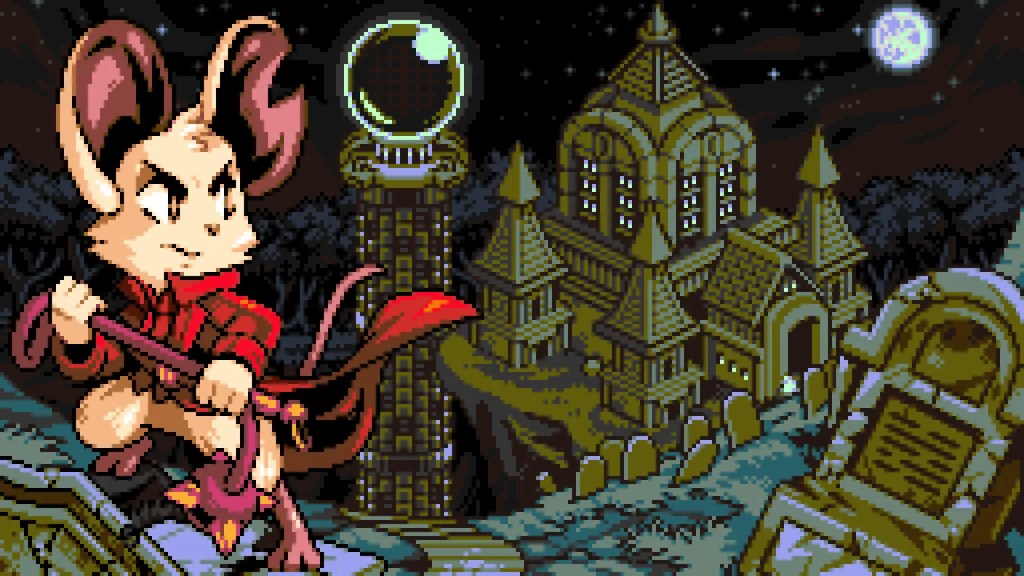
When Yacht Club Games launched Mina the Hollower, it felt like a time capsule from 1998 had been unearthed, polished, and injected with modern, razor-sharp design. Visually, the game is a love letter to the Game Boy Color (GBC) era, sporting a strict 8-bit aesthetic, a tight 4:3 aspect ratio, and a square-tile grid layout that instantly evokes memories of top-down adventures on a monochrome screen under a streetlamp.
But beneath that nostalgic, cutesy pixel art lies a completely different beast. While it presents itself as the spiritual successor to the GBC Legend of Zelda titles, Mina radically subverts those classic foundations by layering on aggressive, modern combat mechanics inspired by Bloodborne and Castlevania.
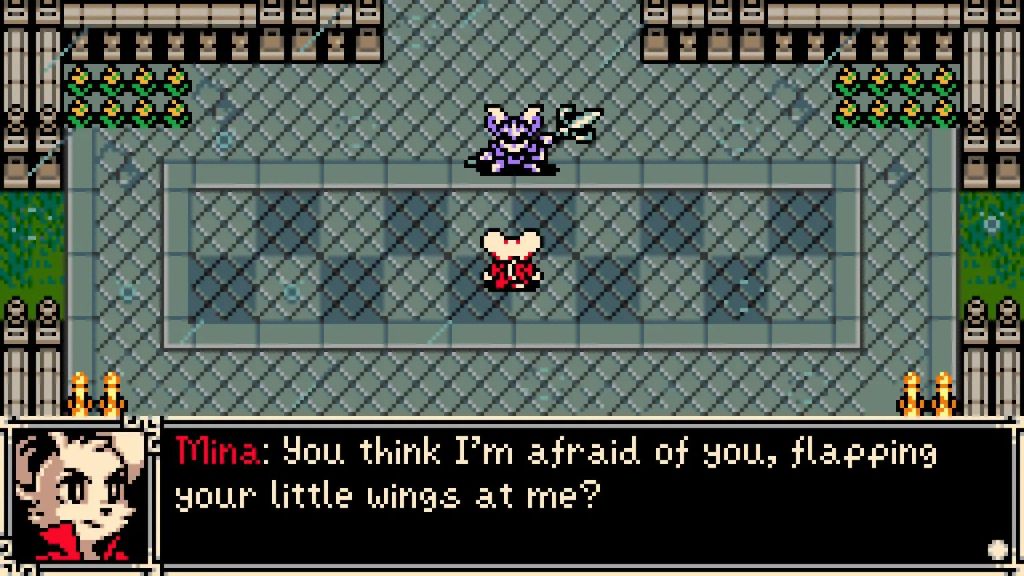
At first glance, Mina the Hollower mimics the exact grammar of The Legend of Zelda: Link’s Awakening and Capcom’s Oracle of Ages / Oracle of Seasons duology. The game utilizes a top-down, screen-scrolling perspective where each screen feels like a miniature puzzle or combat arena. Objects, text boxes, and item icons are designed with the intentional chunkiness dictated by the limited real estate of a portable screen.
So, who is our little hero? You control Mina, a brilliant “Hollower” mouse exploring the Tenebrous Isles—a shifting, interconnected overworld dotted with distinct biomes (like the hauntingly beautiful, autumn-locked region of Septemberg) and sprawling, puzzle-filled dungeons.
The audio is a call back to some of the greatest 8 bit soundtracks of days long gone. The chiptune soundtrack—co-composed by Jake Kaufman and legendary Streets of Rage composer Yuzo Koshiro—uses the exact square and triangle wave constraints of the GBC sound chip, giving it that piercing, catchy majesty characteristic of classic Zelda tracks.
While the visual skin is pure Nintendo, 1998, the mechanical skeleton is thoroughly modern, punishing, and deeply open-ended.
Now, how exactly does Mina actually compare to the legends headed by the green tunic hero with the Master Sword? 1. Open Exploration vs. Metroidvania Gating
In Link’s Awakening, your exploration is strictly gated by the items you find. You can’t cross a pothole until you find Roc’s Feather; you can’t lift a rock until you earn the Power Bracelet.
Mina completely throws out this linear structure in favor of true open-ended exploration. The overworld is fully open right from the start, allowing you to tackle its initial main dungeons in any order you see fit. There are no arbitrary paths blocked by missing items—only your own mechanical skill keeps you from wandering into an endgame zone.
2. Bloodborne-Style Aggression vs. Zelda’s Defense
Combat in GBC Zelda games is fundamentally defensive. You raise your shield, wait for a Stalfos to strike, bounce them back, and counter with a static sword swipe.
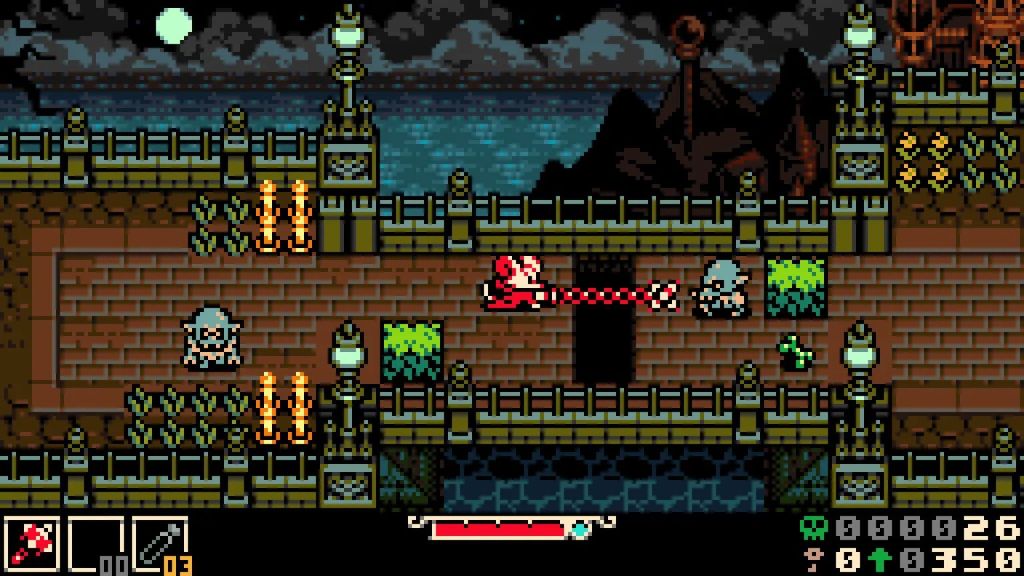
Mina demands relentless aggression. It utilizes a rally/healing system heavily inspired by Bloodborne. When you take damage, a chunk of your health bar turns yellow. If you launch into the fray and successfully land attacks, you refill a “Plasma” gauge that allows you to use your healing vials to reclaim that lost life. If you hesitate or back away defensively, that health is gone forever.
3. Build Variety and Customization
Link has a very defined, iconic toolkit. Aside from swapping a couple of secondary items on your A and B buttons, everyone plays Zelda the same way. Mina functions much more like a modern action-RPG.
Instead of a mandatory sword, you choose from five distinct primary weapons. You can play like a Belmont with the Nightstar (a heavy mace-on-a-chain whip), keep your distance with an Arm Cannon, or opt for faster melee blades.
You can also discover and equip up to five swappable Trinkets simultaneously to drastically alter your gameplay and playstyle. You can build Mina for pure exploration (granting wall grabs, longer jumps, and extended burrowing) or optimize her for boss fights (stacking damage-per-second multipliers and health extenders).
4. The defining mechanical gimmick of Mina the Hollower is her ability to burrow beneath the earth. By holding down the jump button, Mina dives underground, becoming briefly invulnerable, moving at high speeds, and passing beneath hazards or enemies before popping back up for a high-flying aerial strike.
Where Zelda puzzles rely on blocks, switches, and specific tools, Mina builds its puzzles and boss arenas entirely around the momentum of this burrowing mechanic. It turns a traditional top-down adventure into a fluid, rhythmic dance of diving, dodging, and surfacing.
Mina the Hollower takes the beloved aesthetic shell of the Game Boy Color and hollows it out, filling the interior with the punishing difficulty, rich build customization, and atmospheric environmental storytelling of a modern dark-fantasy action game. It doesn’t just recreate the past,it evolves it. It’s such an interesting take on the formula that was the reason so many of us became gamers to begin with.
Do you play on grabbing Mina the Hollower for a trip down nostalgia lane? We sure do!
For the latest and greatest in nerd culture keep it right here with your pals at the Pixel Parlor!



Leave a comment