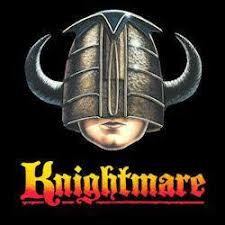
Before virtual reality headsets became household gadgets and long before Twitch streamers guided players through digital worlds, there was Knightmare, a British children’s television game show that transformed living rooms into fantasy adventures and made viewers feel as though they were witnessing the future.
Broadcast from 1987 to 1994 on ITV, Knightmare wasn’t just a game show. It was a dungeon-crawling quest, a fantasy role-playing game, and an early experiment in virtual reality all rolled into one extremely cool package!
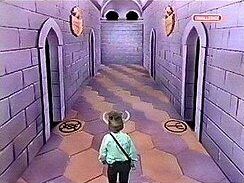
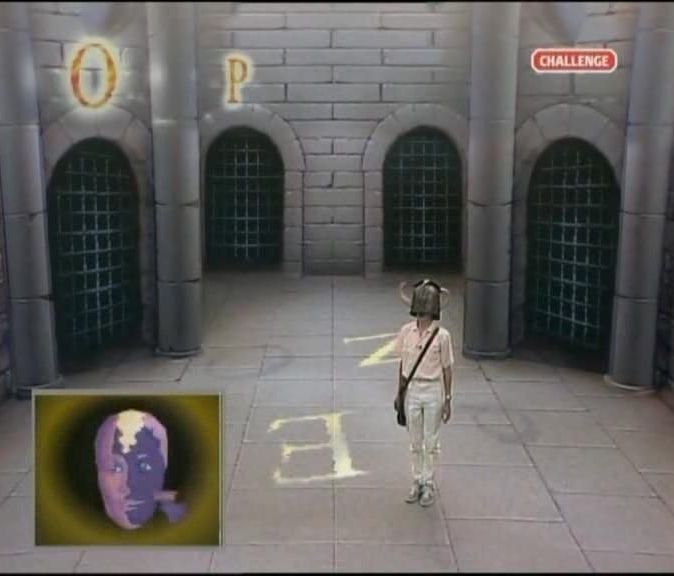
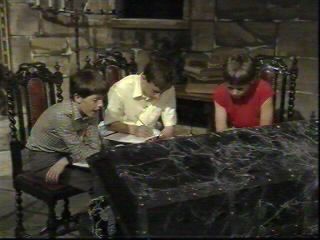
The premise of Knightmare was deceptively simple. A team of four children entered a mysterious medieval world ruled by the enigmatic Dungeon Master, Treguard. One contestant, known as the Dungeoneer, wore a bulky helmet that obscured their vision almost completely, only allowing just enough vision to see their feet. Guided only by the voices of their teammates, they navigated a computer-generated fantasy realm filled with puzzles, traps, monsters, and magical challenges. What made Knightmare truly remarkable was its use of chroma-key technology. Contestants appeared to walk through castles, caverns, enchanted forests, and ancient ruins that existed only through computer graphics and practical effects.
By modern standards, the visuals seem nostalgically primitive. Yet for children growing up during the era of the Commodore 64, ZX Spectrum, and early home computers, Knightmare looked astonishing. The show created the illusion that ordinary kids had stepped inside a fantasy video game. In many ways, Knightmare anticipated the immersive gaming experiences that would not become mainstream until decades later.
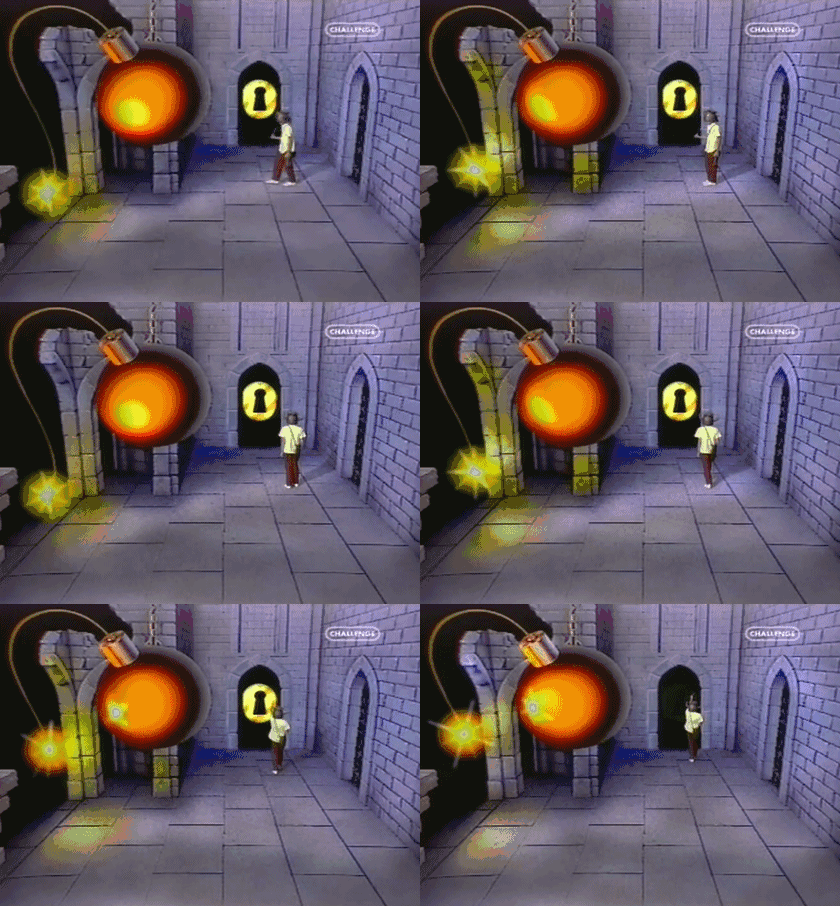
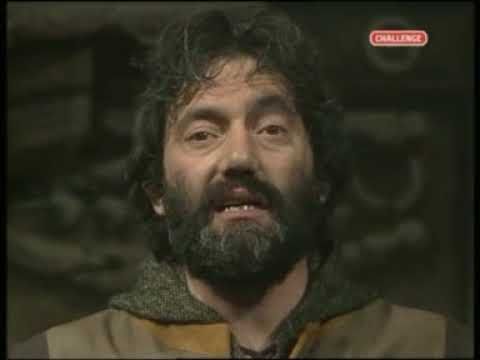
No discussion of Knightmare would be complete without mentioning Treguard. Portrayed by actor Hugo Myatt, Treguard served as narrator, guide, judge, and occasional tormentor. Dressed in medieval-like garments and speaking with theatrical gravitas, he became one of British television’s most memorable hosts. His dramatic introductions, cryptic clues, and unwavering seriousness elevated the show’s high-fantasy atmosphere. For countless viewers, Treguard wasn’t simply a host. He was the keeper of the dungeon itself. The dungeon master, if you will!
Many children’s game shows focus on bright colors, simple rules, and fast-paced action. Knightmare took a different approach. Its puzzles were genuinely challenging. Contestants often had to solve riddles, remember clues, manage resources, and think strategically. The show expected children to be clever, observant, and cooperative.
As a result, victories felt earned. Failures, meanwhile, could be devastating. One wrong instruction could send the Dungeoneer tumbling into virtual oblivion. That sense of danger gave Knightmare a tension rarely seen in children’s programming.
Although never officially connected to tabletop RPGs, Knightmare borrowed heavily from fantasy gaming traditions. The dungeon setting, magical artifacts, quest objectives, non-player characters, and puzzle-solving mechanics felt remarkably similar to campaigns inspired by games like Dungeons & Dragons. Many viewers who later became gamers, fantasy writers, or game designers cite Knightmare as an early influence.
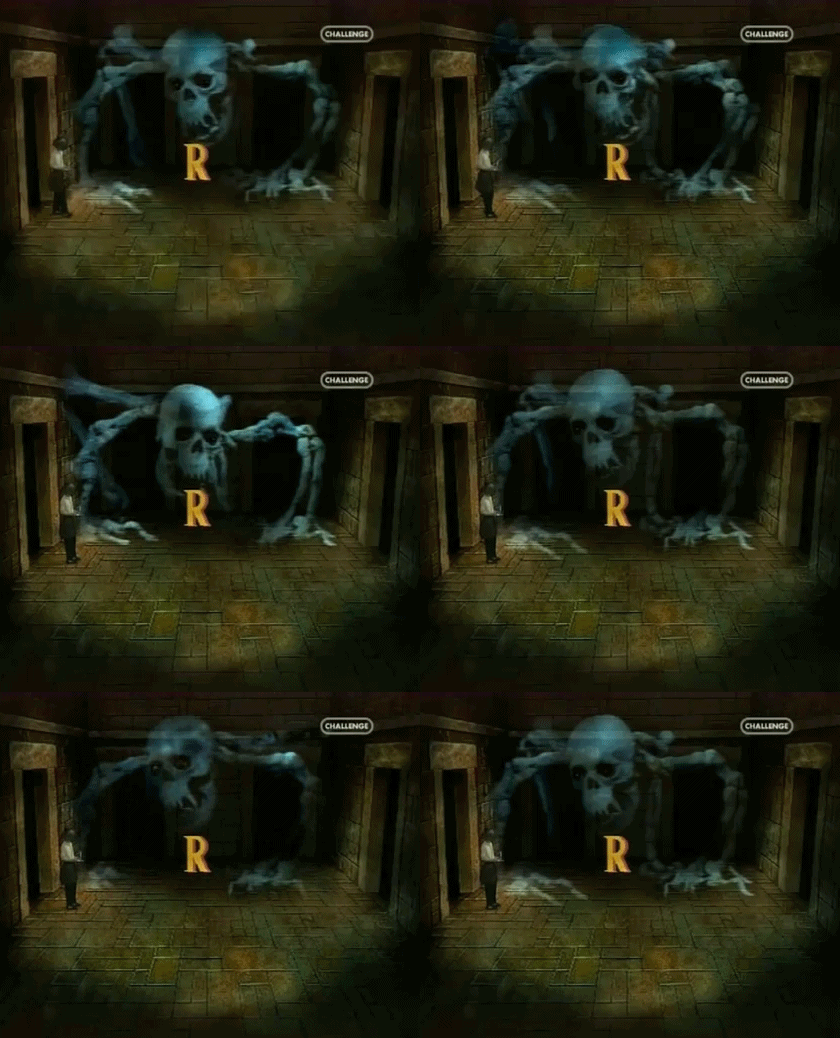
More than thirty years after its final episode, Knightmare remains beloved among retro television enthusiasts. Part of that appeal is nostalgia, but there’s something deeper at work.
The show represented a rare moment when television dared to actually experiment. It blended fantasy storytelling, emerging technology, and audience participation into a format that had never been seen before. Modern VR games, escape rooms, livestreamed role-playing campaigns, and cooperative adventure games all share DNA with concepts Knightmare that has been explored decades earlier.
What once seemed like television magic now feels surprisingly prophetic.
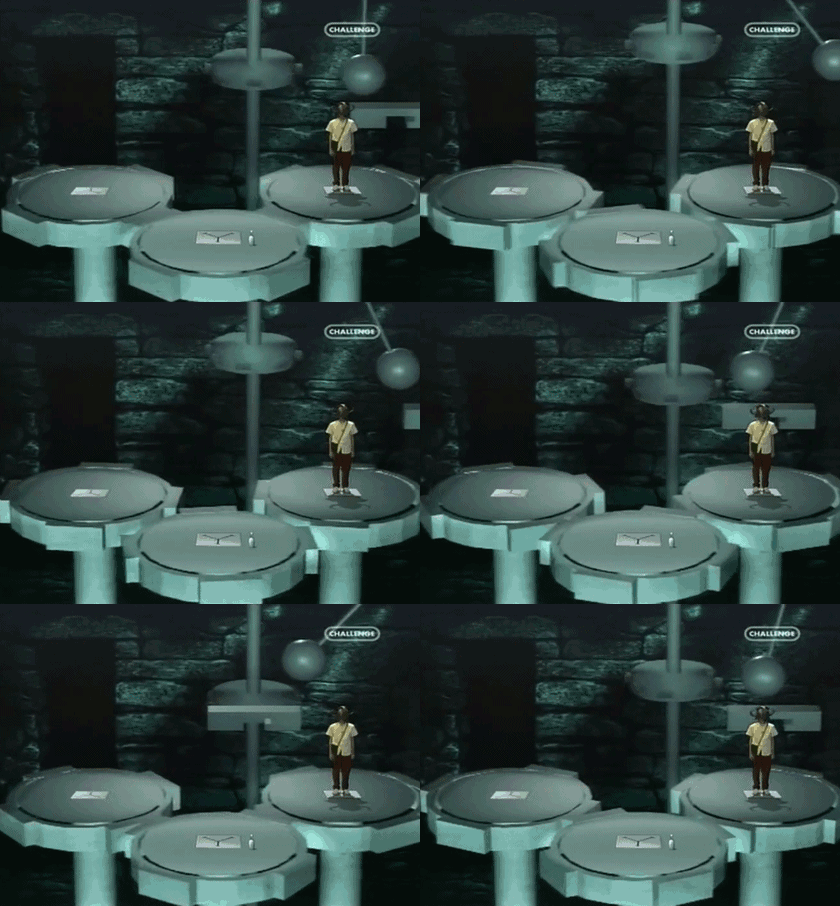
Armed with little more than imagination, primitive computer graphics, and a wonderfully theatrical Dungeon Master, the series created an experience that felt genuinely immersive long before immersive entertainment became commonplace.
For those who grew up watching it, Knightmare remains a treasured relic of television’s golden age of experimentation. And for newcomers discovering it today, it’s a fascinating reminder that some of the most innovative ideas in gaming and entertainment were hiding in children’s television all along.
As of the publication of this article, you can watch the entire series for free on YouTube!
Have you ever watched this incredibly retro cult classic? Let us know in the comments below and share this article on your socials to keep the convo going!



Leave a Reply