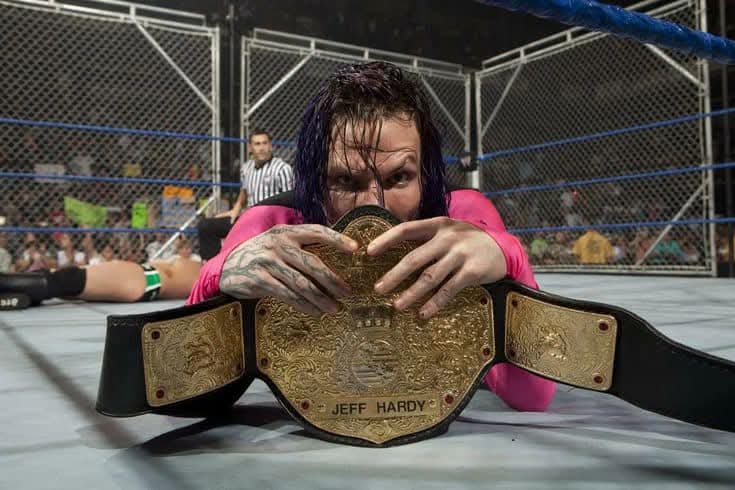
In the glittering, high-octane world of professional wrestling, championships are more than just “props” to hold your pants up. They are symbols of blood, sweat, and occasionally, a very questionable creative decision. But among the sea of gold-plated leather, one title has always carried a certain je ne sais quoi of pure, unadulterated prestige: The World Heavyweight Championship.
Whether you call it the “Big Gold Belt” or the “Heavyweight Crown,” this title doesn’t just represent a victory; it represents a lineage that smells of expensive cigars and feels like a main event in 1980s Charlotte, North Carolina. To understand the prestige, we have to look at the DNA. This isn’t just a WWE creation, it’s a belt with a wandering soul. The iconic “Big Gold” design debuted in 1986, originally representing the NWA (National Wrestling Alliance) and later WCW (World Championship Wrestling).
When WWE bought WCW in 2001, they didn’t just get the tape libraries and a bunch of confused mid-carders, they inherited the most beautiful piece of hardware in the history of the industry.
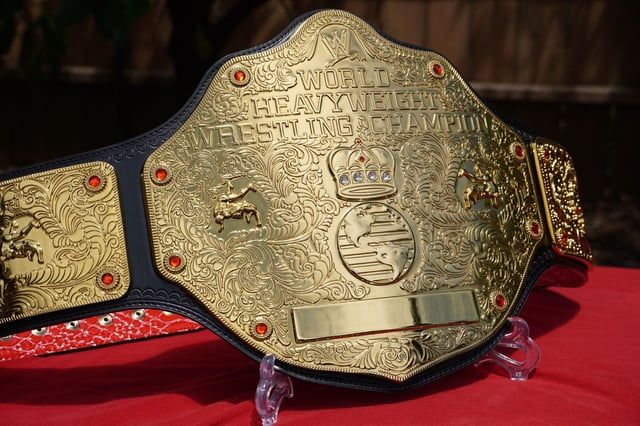
Deeply etched floral patterns, a massive nameplate, and a crown on top. It looks like something a king would wear to a bar fight.
If the WWE Championship (the “Spinner” or the “Big Logo”) is a blockbuster movie, the World Heavyweight Championship is an Oscar-winning period piece. It’s for the “wrestler’s wrestler.”
The history of this title is essentially a “Who’s Who” of men who could legitimately take your head off while wearing sequins. Think Ric Flair. The belt was practically fused to his waist. It traveled the world, defended in Broadway-style matches that lasted 60 minutes and ended in a puddle of “Nature Boy” perspiration.
In 2002, RAW needed a top prize. Eric Bischoff—in a peak “because I said so” moment—handed the Big Gold Belt to Triple H. While it started as a gift, “The Game” spent the next several years defending it with the ferocity of a man protecting his last bottle of hair conditioner.
From Edge’s “Ultimate Opportunist” runs to Batista’s powerhouse reign and The Undertaker’s gothic dominance, the belt became the centerpiece of the SmackDown brand, often referred to as the “Land of Opportunity.”
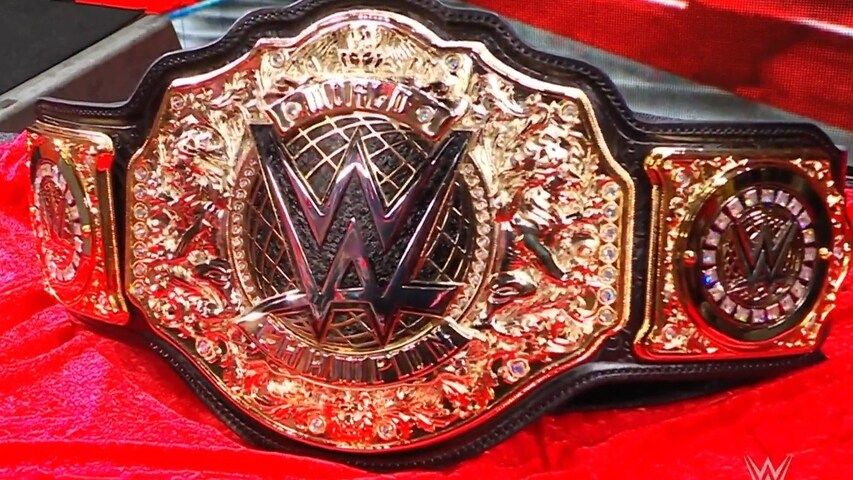
After being unified and retired in 2013 (RIP to a legend), the title made a triumphant return in 2023. Triple H, now holding the literal keys to the kingdom, unveiled a new version.
This modern iteration pays homage to the “Big Gold” heritage—featuring the classic filigree and the crown—but with a big “W” stamped in the middle, because branding is a relentless beast. Seth “Freakin” Rollins became the inaugural champion of this new era, cementing the title as the workhorse’s prize—a belt defended on every continent, every Monday night, and every time someone looks at Seth’s flamboyant suits the wrong way.
Why It Actually Matters…
In the grand theater of WWE, titles come and go. We’ve seen belts shaped like skulls, belts that spin, and belts that look like giant pennies. But the World Heavyweight Championship remains the “Serious One.”
It’s the title that says: “I might not be the face on the cereal box, but I am the best person between those four ropes.” It carries the ghosts of Flair, Steamboat, Sting, and Booker T. It’s a bridge between the grit of the old-school territories and the cinematic spectacle of modern-day sports entertainment.
So, the next time you see a wrestler hoisting that heavy gold over their head, ignore the logic of “scripted” outcomes for a second. Look at the etching, the weight, and the history. You aren’t just looking at a belt, you’re looking at the most prestigious “Thank You” the business has to offer.
Wrestling is weird, but the Big Gold is forever.
For all the latest and greatest in nerd culture keep it here with your pals at the Pixel Parlor!




Leave a Reply